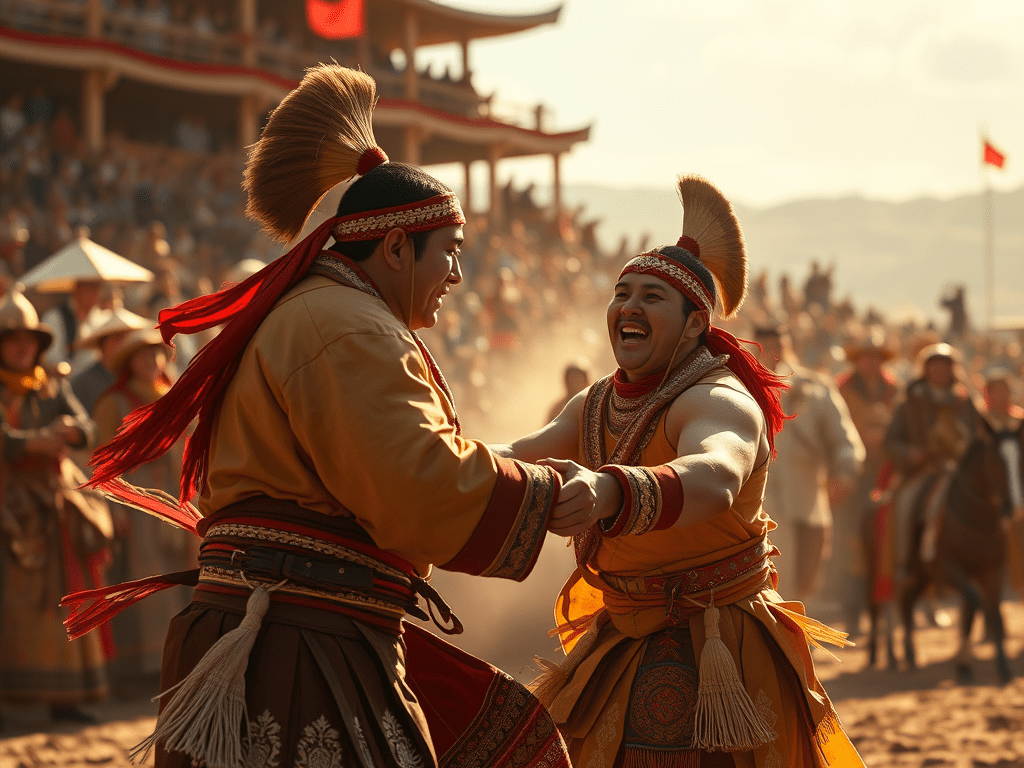
The Naadam Festival, often referred to as the “Three Manly Sports,” is Mongolia’s most important and widely celebrated national holiday. Held annually in July, it’s a vibrant spectacle of athleticism, culture, and national pride, deeply rooted in Mongolian history and tradition. This blog post dives into the heart of Naadam, exploring its history, traditions, and the captivating events that make it a truly unique experience.
A History Steeped in Tradition
Naadam’s origins can be traced back to ancient times, with evidence suggesting that similar competitions were held as far back as the Mongol Empire. These games were originally used to train warriors, testing their strength, agility, and horsemanship. Over time, they evolved into a celebration of Mongolian identity and independence. After the Mongolian Revolution of 1921, Naadam became an official national holiday, commemorating the country’s independence.
The Three Manly Sports (and More)
While often called the “Three Manly Sports,” Naadam actually features three main competitions:
Mongolian Wrestling (Bökh): This is arguably the most popular event. Wrestlers wear traditional costumes and engage in a unique style of wrestling with no weight classes. The goal is to force the opponent’s back, knee, or elbow to touch the ground. The winners are highly revered and celebrated.
Horse Racing (Mor Uraa): This is a thrilling and often chaotic event featuring jockeys, typically young boys and girls, racing horses across the vast Mongolian steppe. The races can be quite long, covering distances of up to 30 kilometers.
Archery (Sur): This competition tests accuracy and skill with traditional Mongolian bows and arrows. Both men and women participate, shooting at targets from varying distances.
Beyond the three main sports, Naadam also features other traditional activities, including:
Ankle Bone Shooting (Shagai): This game involves flicking small ankle bones of sheep or goats at targets.
Traditional Music and Dance: Performances of Mongolian throat singing (Khoomei), long songs (Urtyn duu), and traditional dances add to the festive atmosphere.
Interesting Facts about Naadam
No Time Limits in Wrestling: Unlike many other forms of wrestling, there are no time limits in Mongolian wrestling. Matches can go on for a considerable amount of time until a winner is determined.
The Titles of the Wrestlers: Winners of the wrestling competition earn prestigious titles, such as “Lion” (Arslan), “Elephant” (Zaan), “Hawk” (Nachin), and “Titan” (Avarga), depending on how many times they have won.
The Importance of the Horse Races: The horse races are not just about speed; they are also a test of the stamina and endurance of the horses. The jockeys are often young children, as their lighter weight is considered advantageous.
Opening Ceremony: The opening ceremony of Naadam is a grand spectacle featuring parades, music, and displays of Mongolian culture. It’s a must-see event for anyone visiting the festival.
Local Naadams: While the national Naadam is held in Ulaanbaatar, smaller local Naadams are held throughout the country, allowing communities to celebrate their local traditions.
UNESCO Recognition: Naadam was inscribed on the UNESCO Intangible Cultural Heritage of Humanity list in 2010, recognizing its cultural significance.
Experiencing Naadam
Attending Naadam is an unforgettable cultural experience. The atmosphere is electric, with crowds of people dressed in traditional clothing, the sounds of music and cheering, and the excitement of the competitions. It’s a chance to witness firsthand the strength, skill, and spirit of the Mongolian people.
The Naadam Festival is more than just a sporting event; it’s a celebration of Mongolian history, culture, and national identity. It’s a time for communities to come together, honor their traditions, and showcase their unique heritage. If you have the opportunity to experience Naadam, it’s an experience you won’t soon forget.
For the latest information on dates and events, visit the official Nadaam Festival website.
 Random Habitant
Leave a comment