
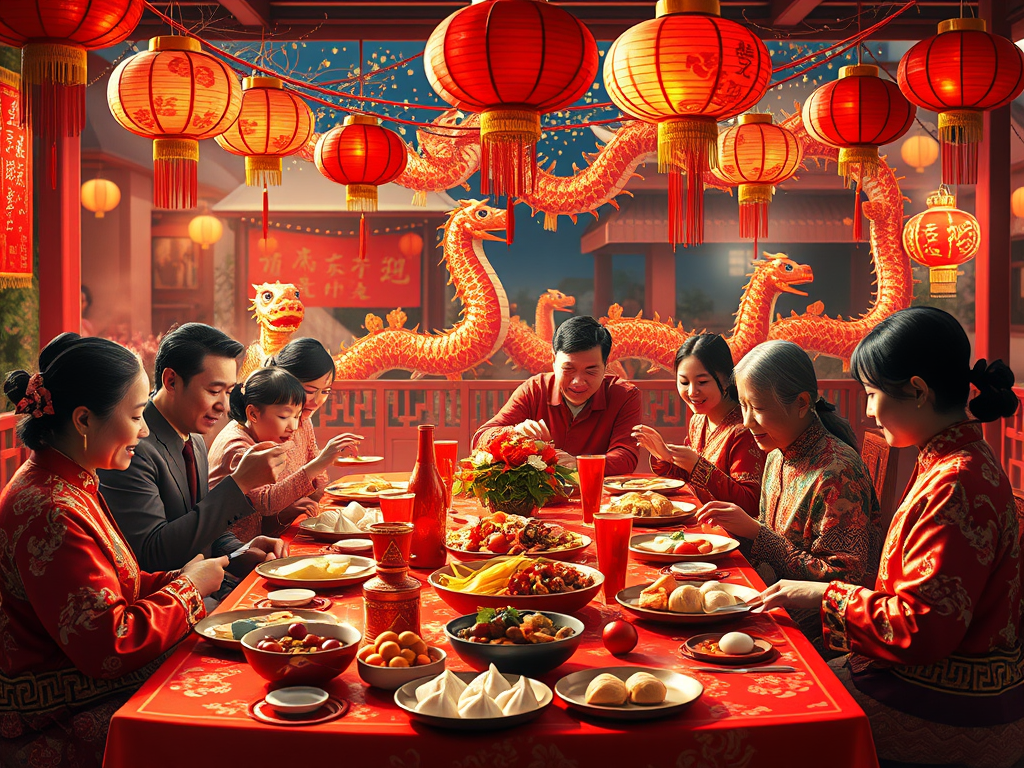
Chinese New Year, also known as Lunar New Year or Spring Festival, is the most important traditional Chinese holiday. It’s a time for families to reunite, celebrate new beginnings, and wish for good fortune in the year ahead. In 2025, the Lunar New Year falls on January 29th, marking the start of the Year of the Snake. Let’s dive into the rich traditions and customs associated with this vibrant festival.
The Lunar Calendar and the Zodiac
Chinese New Year is based on the lunisolar calendar, which is why the date changes each year. Each year is also associated with one of the 12 zodiac animals: Rat, Ox, Tiger, Rabbit, Dragon, Snake, Horse, Goat, Monkey, Rooster, Dog, and Pig. These animals follow a repeating 12-year cycle. 2025 is the Year of the Snake, succeeding the Year of the Dragon (2024).
What does the Year of the Snake symbolize?
In Chinese culture, the Snake is often associated with wisdom, intelligence, and mystery. People born in the Year of the Snake are believed to be thoughtful, intuitive, and possess a deep inner strength. They are often seen as graceful, sophisticated, and have a keen eye for detail. While some Western cultures may associate snakes with negative connotations, in Chinese tradition, they are generally viewed with respect and admiration.
Key Traditions and Celebrations
Cleaning and Decorating: In the days leading up to the New Year, families thoroughly clean their homes to sweep away any bad luck from the previous year. They then decorate with red lanterns, paper cuttings, and couplets with auspicious messages. Red is the dominant color, symbolizing good fortune and prosperity.
Family Reunion Dinner (除夕 – Chúxī): The reunion dinner, held on New Year’s Eve, is the most important meal of the year. Families gather to enjoy a lavish feast featuring symbolic dishes such as dumplings (representing wealth), fish (representing surplus), and spring rolls (representing wealth).
Giving Red Envelopes (红包 – Hóngbāo): Red envelopes filled with money are traditionally given to children and unmarried adults by their elders. The red color symbolizes good luck, and the money is meant to bring prosperity in the new year.
Firecrackers and Fireworks: Traditionally, firecrackers and fireworks were used to scare away evil spirits. While their use is restricted in many urban areas today due to safety and environmental concerns, they remain a significant part of the celebration in some regions.
Lion and Dragon Dances: These vibrant and energetic performances are a common sight during Chinese New Year celebrations. The lion dance is believed to bring good luck and ward off evil spirits, while the dragon dance symbolizes power and strength.
Visiting Temples and Paying Respects: Many people visit temples to pray for good fortune and blessings in the new year. They may also make offerings to their ancestors.
What to Expect in the Year of the Snake (2025)
While astrology should be taken with a grain of salt, the Year of the Snake is generally predicted to be a time for reflection, introspection, and strategic planning. It may be a year for focusing on personal growth, developing new skills, and making wise decisions.
How to Greet Someone During Chinese New Year
The most common greeting is “新年快乐” (Xīnnián kuàilè), which means “Happy New Year.” You can also say “恭喜发财” (Gōngxǐ fācái), which means “Wishing you prosperity.”
Chinese New Year is a rich and vibrant celebration filled with traditions and symbolism. As we approach the Year of the Snake in 2025, it’s a wonderful opportunity to learn more about this important cultural event and appreciate the values of family, renewal, and hope for a prosperous future.
 Random Habitant
Leave a comment