
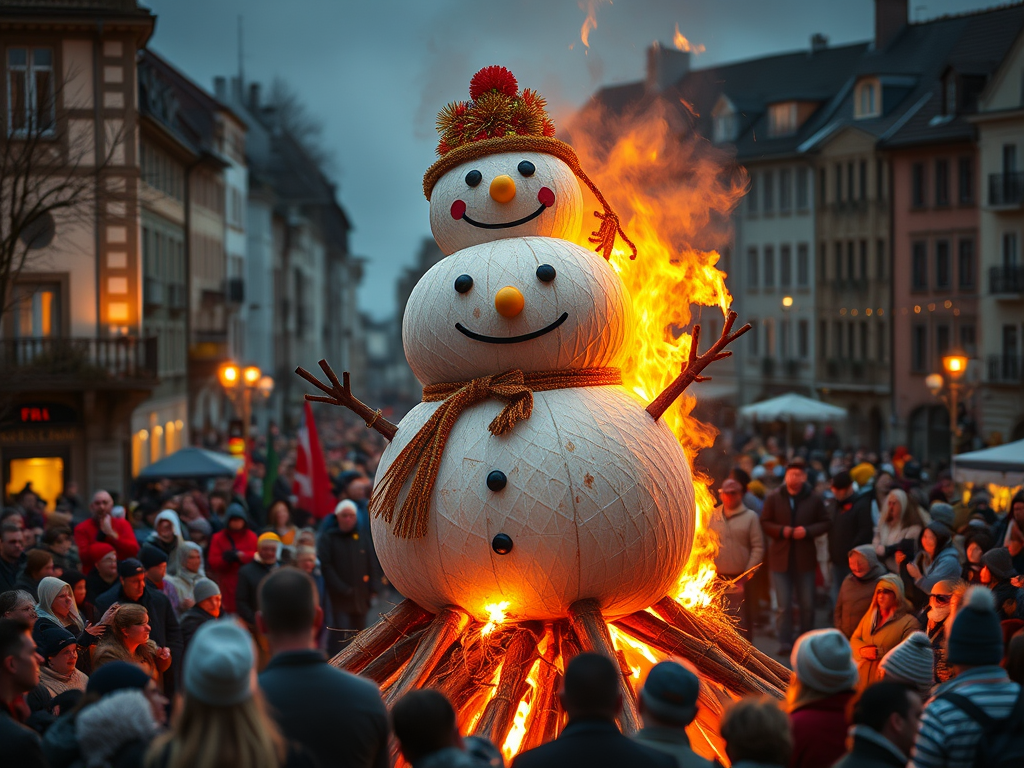
Sechseläuten, a traditional spring festival celebrated in Zurich, Switzerland, is a vibrant and symbolic event marking the end of winter and the arrival of spring. The highlight of the festival is the burning of the Böögg, a snowman-like effigy, whose exploding head is said to predict the coming summer’s weather. This blog post delves into the history, traditions, and fascinating details of this unique Swiss celebration.
A Look Back in Time
The origins of Sechseläuten can be traced back to the medieval times. The name itself translates to “six o’clock ringing,” referring to a 16th-century decree that mandated all work in Zurich to cease when the church bells rang at 6 p.m. during the summer months. This marked the shift to longer daylight hours and the beginning of the outdoor work season. Over time, this practical custom evolved into a festive celebration.
The Böögg: A Symbol of Winter’s Demise
The central figure of Sechseläuten is the Böögg, a large snowman-like figure made of wadding and filled with firecrackers. It represents winter and is perched atop a large pyre in Sechseläutenplatz, a central square in Zurich.
The Burning and the Prediction
The climax of the festival is the burning of the Böögg. At precisely 6 p.m. on Sechseläuten Monday (usually the third Monday in April), the pyre is set alight. The crowd watches with anticipation as the flames climb higher and higher, eventually reaching the Böögg’s head. The time it takes for the head to explode is believed to predict the weather for the upcoming summer:
Fast Explosion: A quick explosion signifies a long, hot, and sunny summer.
Slow Explosion: A longer burn time suggests a cooler and wetter summer.
This tradition has become a popular point of discussion and friendly rivalry, with locals eagerly anticipating the Böögg’s verdict.
The Children’s Parade and the Guilds’ Parade
Sechseläuten is not just about the burning of the Böögg; it’s a multi-day celebration with various events:
Children’s Parade (Kinderumzug): On the Sunday before the Böögg burning, children dressed in traditional costumes parade through the city, carrying decorated lanterns and enjoying the festive atmosphere.
Guilds’ Parade (Zunftumzug): On Sechseläuten Monday afternoon, members of Zurich’s traditional guilds, dressed in historical costumes and accompanied by music bands, parade through the city to Sechseläutenplatz. This parade is a colorful spectacle showcasing the city’s rich history and traditions.
Interesting Facts about Sechseläuten
The Böögg’s Head: The Böögg’s head is filled with firecrackers to ensure a dramatic explosion. In recent years, there have been instances where the head took a very long time to explode (or even didn’t explode at all!), leading to much amusement and speculation.
The Guilds: Zurich’s guilds, historically powerful associations of craftsmen and merchants, play a central role in the festival. Their participation in the parade is a reminder of the city’s historical past.
The Music: Traditional Swiss music, including brass bands and fife and drum corps, provides the soundtrack for the festival.
The Food: During the festival, various food stalls offer traditional Swiss treats, such as sausages, pretzels, and roasted almonds.
The Celebration’s Cancellation: Due to the COVID-19 pandemic, the Sechseläuten festival was canceled in 2020 and 2021. In 2022, it was held with some restrictions. In 2023, it returned to its full glory.
Experiencing Sechseläuten
Attending Sechseläuten is a unique opportunity to experience Swiss culture and traditions firsthand. The vibrant atmosphere, the colorful parades, and the excitement surrounding the Böögg burning make it a memorable event for visitors of all ages.
Sechseläuten is more than just a festival; it’s a symbol of Zurich’s history, traditions, and community spirit. It’s a celebration of the changing seasons and a reminder of the enduring power of tradition.
For the latest information on dates and events, visit the official Sechseläuten Festival website.
 Random Habitant
Leave a comment